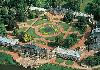


Pillnitz is a delightful amalgamation of romantic river and vineyard scenery, an idyllic park and a trio of fascinating and unique buildings. But the most beautiful aspect of Pillnitz is its park, which has remained true to its original design as a pleasure garden. Despite being continually altered down the years, the 28-hectare grounds have lost nothing of their former splendor and stand as a vibrant and delightful monument to landscape gardening over the centuries.
The park is deserving of particular attention , as it combines the strict forms of the baroque period with those of an English landscape garden. Alongside many rare trees the over 200-year-old Japanese camellia is a particular magnet for visitors.
The sunny slopes around Pillnitz allow the grapes to ripen for the exquisite dry Elbe valley wines. Here you can also discover the tiny Vineyard church built by Pöppelmann.
Equally to be recommended are visits to the Carl-Maria-von-Weber Museum in Hosterwitz or the Richard-Wagner Museum in Graupa. Both composers chose the idyllic riverside setting as a summer retreat.
Augustus the Strong, born in 1670, took to the throne at the age of 24 after the death of his brother. Under his rule, the royal seat of Dresden developed a Europe-wide reputation as a centre of art and culture. The city's cosmopolitan art and cultural scene brought with it a number of magnificent baroque buildings. Augustus the Strong died in Warsaw in 1733. Important Site links:
http://www.germany-tourism.de